Sunday, October 18, 2015

XLI. Las Dos Galerías, Parte 2: La Peña de Santos Rico

The Two Galleries, Part 2: The Sorrows of Rich Saints...No, that translation's not right--although I like the contradiction inherent in a "rich saint" and the sorrow one might feel from the futility of trying to reconcile those two opposites. "Sorrow" is the definition of "pena", without the tilde over the "n", mistakenly also given by Google Translate for the word "peña", with the tilde. The latter word has several meanings: a rocky pinnacle and also a group of people with a common interest. "Santos Rico", according to The Artist, is the proper name of a picaresque character in a book he wrote, also pictured in the sign on the picture below right, riding on the back of some chump...

The end of a two-month plus saga--opening night for our
neighbors
Backing up a bit in the gallery chronicle: the end of August, not long before we embarked on our scenic trip to much maligned Michoacan, we became aware of a new group coming and going, in and out of Axixic’s rusting turquoise double doors. We callously dubbed them The Neck Brace Family for the complicated apparatus worn by the tall, thin, shaven-headed father. The two young children were usually spatting, and the usual—unfortunate—expressive mode of the cute, three-year-old girl was to scream. Mom always seemed to have a lot on her mind. Like many visitors to the gallery they drove a sun-blistered car, which quality was offset by the brio of its Darth Vader gas cap.

NBF’s first visits were notable because they seemed designed to deliver the children to The Artist’s care. He would gamely try to corral the two away from the edge of the rooftop outside his studio as they gamboled among its detritus. Considering the familiar manner with which he handled them, we speculated that the children might be his own, delivered for safekeeping by a former inamorata. But—several weeks later—after an up close and friendly encounter with The Artist when I clocked his wrinkles, we realized there was at least a thirty year plus age gap between him and the children’s mother. Our initial hypothesis of the relationship was revised to assign him the probable role of grandfather…meaning Mom could well be The Artist’s daughter.

Quick progress by Augie and Jefe after a long anticipated
beginning--September 8
On September 6, the day after my birthday, we rolled up to our casa from a week-long sojourn in picturesque Patzcuaro.  Before moving on to what we found out (or didn’t) about Galería Axixic’s possible renewal upon return home, I should introduce Augie. He uses this nickname, he laughingly told me, because his proper first name sounds very much like slang for “diminutive penis”. Augie is a friendly fellow who has the weekend car washing concession on this block of Calle Constitución. Our first interaction was several months ago when he noticed me carrying a leaking pot of posole stew home from the dispensa up on the corner of Ocampo and Morelos. He offered a plastic bag to contain it.

Now—returning to what we saw that Sunday afternoon at Galería Axixic: Nada. No change. Exactly the same sight to which we had said, “Hasta luego” six days before. Same peeling paint, hanging wires, et cetera, et cetera. Needless to say we were disappointed. But we had other troubles—a horrible case of Montezuma’s Revenge that would keep us trotting for most of the week.

Next day, September 7, 2015. Monday morning—beginning of the work week. We dragged our depleted and complaining bodies out of bed late. Staggered groaning to coffee and balcony, when what should our wondering eyes behold?!: Nuevo amigo Augie at work scraping the peeling paint from Galería Axixic’s front wall. He would continue to mine the veins of rotten stucco with a vigor that brightened our leaden mood. And it wasn’t going to be just a surface job; it was going to be deep.

Hallelujah!! Or however you would say that en español.

As the days passed, prep work continued. Extensive gouges were made all over the surface of the wall. Augie arrived early (for this street)—about 8:30—each morning, rang the timbre patiently until one of the gallery denizens roused to let him in. Harrowing ladder work ensued— standing on steps forbidden in more safety-conscious states. Frightening stretches with sharp tools. Less than a week after this dramatic (at least for us) beginning, Augie was joined by another hired hand who appeared to be his jefe. 
For nearly three weeks, this clean visage is all we saw, but
work continued on the inside.

The fill job followed, mortar mixed as usual directly on the sidewalk, slathered into place in the stucco arroyos, and smoothed. By now, El Otro Guapo and La Novia had become involved in the project while still maintaining their daily jewelry table at the plaza. She would pick at the wall’s overlooked scabs; he would help haul heavy loads—bags of cement and buckets of dirt to be sifted through screens to the consistency of sand. 

All these materials would have to be delivered, of course, which meant saving a parking space in front of the gallery. The usual way of accomplishing this is by placing some large object (chair, box, tree trunk) in the street as a placeholder. One day we noticed our new favorite (and very attractive) couple trying to decide what this object would be; nothing was at hand. La Novia shrugged and flung herself down on the dusty cobblestones spreading arms and legs wide like a snow angel in the street. We found this incredibly endearing.

Preparation complete, we impatiently waited through a fallow spell before painting began. And then there was another period of seeming inactivity after the white base coat was applied. Augie departed back to his regular, irregular job of cleaning a church in Chapala. Meeting Otro Guapo on the narrow sidewalk on my way back home with some huevos from the Little Girl dispensa, I congratulated him on the accomplishments and asked what plans they had for completing the painting, and especially if all this work portended a rebirth of the gallery.

Experimenting with straw application, left to right--Otro
Guapo, La Novia, Trabajador, The Artist, (original) Guapo.
OG was effusive and friendly—his natural state, as we were discovering—and excitedly described something that, because of the dratted language barrier, was mostly incomprehensible to me. His enthusiasm was catching, though, and I conveyed same to my always curious-as-a-cat wife. There was something about a mural, I thought he had said, of many colors, perhaps, and Galería Axixic  would definitely be opening anew!

By late September, mysterious work was also going on deep in the gallery interior, even in the courtyard garden whence large loads of plant material were removed and hauled off to wherever that stuff goes. Regular deliveries of building supplies—buckets of paint, paving stones, reinforcing fence and copious amounts of cement. More sidewalk mortar mixing. More workmen. 

Through all this, NBF continued to provide vehicular support and receive childcare; the tiny hellion continued to scream fitfully. The Artist kept up his weekend sojourns wherever, leaving and returning with pack on his back. El Guapo became more and more scarce. Worried Man was a distant, slightly unpleasant memory, whom we later heard had gotten a job delivering decorative plants to institutions. The Crabbies continued to live up to their name; one of them developed a from-out-of-town boyfriend, but really, who cares? And the young couple, El Otro Guapo y La Novia, continued to ingratiate themselves with such acts as the latter painting hearts on the bare leg of the former as he balanced tip-toe on the top rung (natch), slapping whitewash as high as he could reach.

We still did not know what vibrant color(s) would fill the canvas of the gallery’s blank white face. On the morning of September 29th, a bale of hay (!) was delivered to our new friends and La Novia set to work, cutting the dried stalks into three inch-long pieces (?). A couple of hours later, my animated wife called me to the balcony to see the scene for which we had been waiting. The neutral white was finally being covered…with a muddy, adobe-clay tan color, only a tad less bland. But wait. As the first section was being brushed on under The Artist’s direction, he flung handfuls of straw that stuck to the still-wet paint (???).

The gallery, now cultural center, on the afternoon of its opening--all
painting complete and the sign just installed.
This unusual process gradually came to feel like a stroke of genius. The bits of straw gave a rustic look and inviting texture to the forty foot-long wall. Passers-by were irresistibly drawn to run their fingers lightly over the rough surface. As I was predicting that this attraction would result in the pieces of hay being pulled off, a second coat of the tan paint was mixed and applied to cover and stick the straw more securely. And just as I was grousing that the color was OK, but totally unexceptional, The Artist oversaw application of a coral trim that both warmed and brightened the look as well as perfectly complementing the turquoise windows and doors.

Ah, those windows and doors! For the next week or so, they would be the object of our attention—but seemingly ignored by everyone else. La Novia was the only one who appeared to care at all, scratching and sanding at the rust and crusty paint on occasional evenings. It was about this time that NBF—the father (who later introduced himself as Edgar), happily now relieved of the neck brace that gave the family its name—came to the gallery one afternoon with a printing of invitations to the opening—October 17th it would be. Our interest by now was completely unabashed, and we were honored to receive the very first invite. 

Just inside the gallery--uh, cultural center--the jewelry showroom
is to the right, paintings are hung all around the covered areas
of the courtyard.
Only a few days later, during my Spanish lesson at the biblioteca, my friendly wife accepted an invitation to tour the still incomplete interior and spilled this information into my envious but tell-me-more ears. She also earned a major coup by learning the names of the couple to whom we had been shouting daily encouragement—Alejandra and (yes, true!) Alejandro, or Alex.

The doors and window frames slowly changed in an unexpected way that spoke volumes for the vision behind their transformation. Where the paint had been removed, the oxidized metal became the finished product. Where the turquoise still stubbornly clung to the surface, it was partially covered with a combination of colors that perfectly mimicked the rusty, distressed metal surface. The finished work spoke to the process of industrial decay offset by the timelessness of the rough adobe-appearing wall. 

I volunteered one afternoon a few days before the opening and dabbled a bit in this part of the job (unfortunately also spilling some rusty paint on a thankfully less visible part of the coral). I spoke to the welcoming Artist and learned his name is Dionicio. I complimented him on his work and we exchanged information about our past. His weekly overnight trips are to camp in the mountains above the village. About once a month he also organizes a day trip to a sweat lodge, or temazcal in the previously mentioned ceremonial grounds. I was honored to receive an invitation to join him on these ventures.

We are proud of the fine work of our vecinos--neighbors
During the last days before The Opening, the only piece not in place was a sign. A mere few hours before the appointed time it was installed—a large unfinished iron slab with the gallery’s new name, La Peña de Santos Rico, and the outline of the two figures (see accompanying photo) etched through the metal plate. Backlit, the light shines through. It couldn’t have been better conceived or executed, we decided. With tears in our eyes, Dionicio, Alejandra and Alex, and Edgar received our appreciative applause. The opening party last night was a love fest and smashing success. 

FLASH: We have confirmed that Alejandra, AKA La Novia, is also the daughter of Dionicio, AKA The Artist. This is in addition to her sister, the still unnamed mom of the group formerly known as NBF. It's a family affair!

Tuesday, October 13, 2015

XL. Las Dos Galerías, Parte 1

The Two Galleries, Part 1

The shabby looking face of Galeria Axixic especially irritated my
fastidious spouse.
One of the distinguishing features of our departamento's (apartment’s) location here in downtown Ajijic is the two galerías directly across the street. They are the backdrop for the human stories we make up to entertain ourselves as we sit on our balcony sipping beverages—in the morning, coffee, and in the late afternoon, margaritas. When we first arrived in this village one of the galleries was clearly on the way up, and the other on the way down—way down—Galería La Mestiza and Galería Axixic, respectively.

The front wall of the former had been painted last winter with a sage and green geometric design around windows and doors, a devilish little chupacabra with its talons bared against a crimson background, and the huge face of a baleful-looking mestiza (half-breed woman) who, unfortunately is the first thing we see as we blink our eyes open to the AM sun. Investigation revealed that this galería had only opened last diciembre with an elaborate fête, but it was closed when we arrived here in May and we have seen no sign since of a re-opening…perhaps, we thought, that would happen in noviembre when the snowbirds return from their summer nests in Toronto, Vancouver, Denver and DC. 

The investigation I wrote of came about because we wanted a local place to hang out, and you can’t get much more local than right across the street. An open gallery would also be a rich mine of human traffic—more fodder for fertile imaginations fed by an insatiable itch to create sense of our surroundings. La Mestiza has a Facebook page that features a video of its opening last winter but no word on if/when it will reopen. But, considering what we had been seeing at Galería Axixic, Mestiza seemed by far our best shot.

We held out little hope for Axixic for several reasons: its scabby paint job, for one thing, and dangling wires. Trash on the sidewalk was often a problem. The plastic letters spelling its name were broken or missing, and a sign advertising its wares sun-faded. At least it was occasionally open in an unscheduled way—although no longer serving food as advertised—but rarely did anyone venture inside the darkness behind its doors.

The one employee (owner? who knew?) we ever saw was a shambling fellow who couldn’t sit still, kept stepping outside, looking up and down the street with a squint and frown, returning to the interior gloom for several minutes before repeating this drill. We dubbed him El Hombre Intranquilo—The Worried, Restless Man. And he was much less than welcoming to us. My few forays inside were met with indifference and the art I saw was uninspiring.

Within several weeks of our arrival we also identified The Artist who had a studio—and perhaps lived—above Galería Axixic. We could see a bucket of paint brushes through his door which opened to a cluttered and unkempt rooftop of dying plants, broken chairs and huge containers holding who-knows-what. At least he was friendlier than The Worried Man, and would return our greetings and wave to us as he hung his laundry. 

Several different Huichol Indian families—identified by their small stature, polished mahogany complexion and colorfully embroidered clothes—would occasionally camp out in the gallery, from there carrying their bundle of sale goods to and from tables set up in the plaza or malecón. That gave the place some cred, in our eyes, and we gradually gathered that The Artist was the moving force behind at least this activity. Meanwhile, El Hombre Intranquilo continued his obsessive vigil, customers few and far between.

Another month and we were able to recognize another pattern—a young fellow we dubbed The Handsome Man (El Guapo) also seemed to use the gallery as a staging point for forays to and from popular tourist spots around the village with a pack full of jewelry for sale. Then, in mid-summer, for a period of 2-3 weeks, a young greaser gringo with a pickup-sans-working muffler and a skinny, skanky-looking female companion—plus three ill-behaved children—began making multiple daily stops at Galería Axixic.  A lot of interminable parking, loud conversations, and incomprehensible (to us) commerce would always ensue. In our eyes, presence of this motley group, including El Guapo's participation, would mark the low spot of the gallery’s existence.

The sinister face of the eponymous mestiza stares at us each morning. It took
awhile for me to be able to ignore those baleful eyes and that skull necklace.
Over at Galería La Mestiza, meanwhile, we had figured out that the crabby woman we occasionally saw wielding a broom in the the carriageway actually lived somewhere in the warren of rooms we imagined were below the rooftop we could see extending back a hundred feet from the street—the rooftop where the cats gather to sun and preen. After about a month this woman was joined by her sister, Crabby Two, and between them they rivaled the eponymous Mestiza for bad energy—rarely a smile or friendly gesture to anyone that we could see. Nor did they ever seem to walk the barrio—just got in their shiny red Mazda and left periodically for what we assumed was the big city—Guadalajara—whence we had heard they came. We also were told they were the owners of this gallery. These were the people who had invited the music, art, food and lively scene pictured in the Mestiza video? It was hard to feature.

Back at Galería Axixic, The Worried Man continued his fretful vigil throughout most of the summer, but did nothing about the peeling paint, wires trailing over the entrance, or empty cups that had contained Coke or Corona and always seemed to find their way to Axixic’s window ledges. We would place bets on how long trash of this type would remain in place; ten days was about average. Sometime in the dog days, El Otro Guapo—The Other Handsome Man—came on the scene, and the Huichols gradually faded away, as did Greaser Gringo and Skinny Skank and her Skimpy Tank Tops (which, to be truthful, I really didn't mind). 

It wasn’t long before we noticed that El Otro Guapo had a girlfriend, whom we cleverly dubbed La Novia, The Girlfriend. The two of them exhibited an industry not previously noticed among Galería Axixic’s other denizens. Every morning they would take tables and packs from the gallery to the plaza where they would spend the day making and selling some fairly attractive jewelry. We liked this commitment as well as the good-natured affection they shared.

It was during this period, also, when we first noticed the occasional presence of unlikely looking gallery guests (read: men with shirt sleeves or jackets, women wearing dresses) gathered for a handful of sit-down confabs that would last for hours. Artist would always be there, often with both Guapos, but El Hombre Intranquilo was only lurking around the edge. We welcomed any activity, and this seemed somehow portentous. We imagined negotiations. Could the Galería Axixic be changing hands!? Was a renaissance its future?! Each of the half dozen or so meetings heightened our anticipation and hopes.

Mid-August, though, all such activity ground to a halt. A gathering of indigenous people from all over North America was taking place up in the mountains above our town. We had seen a poster announcing this event on the gallery’s door, and when the day arrived for preparation of the ceremonial site, all the Guapos, The Artist, even Worried Man, plus bewhiskered newcomers arriving with backpacks—all of them booked up in several scruffy vehicles and decamped for the hills. 

They were gone for ten days. No sign of life at their gallery. Next door, at La Mestiza—no change. We left town for a week at the end of the month, telling ourselves that upon return the promise we had predicted would be kept and an overhaul of Galería Axixic’s exterior—at least—would have begun. Wishful thinking.

To be continued...

Thursday, October 1, 2015

XXXIX. Dinero Divertido

Funny Money

Upper left clockwise: Frida Kahlo, 500p; Nezahualcoyotl, 100p,
Sister Juana de Asbaje, 200p; Jose Maria Morelos, 50p
No disrespect intended but compared to the stodgy hunter-green, tan and black of Yankee dollars with their elaborate scrollwork reminiscent of a 19th century death certificate, just looking at a Mexican peso bill can make you feel a little giggly. They’re all smaller for one thing, and instead of that heritage, counterfeit-befuddling linen paper, pesos have a crisp plastic feel, each one a different, pastel color. And not just engravings of a bunch of dead white politicians either—you’ve got a pre-Columbian poet-warrior with an unpronounceable name that means “Coyote something or other”, a 17th century nun and writer who was the subject of a weepy telenovela, and the iconic Frido Kahlo, although admittedly on the flip-side of Diego Rivera—both artists, though.

So, there’s the appearance for one thing, and the value, for another, that make you want to shout “¡Olé!” as you spend them left and right. At least that’s the initial feeling we had when we arrived with a thick stack of Mexican currency in this balmy land of rustling palms.

You've got that $8 US bottle of tequila; $2 US more buys you
all the the ingredients shown for some guacamole, plus limes
to go with your margaritas.
Getting down to brass centavos: it wasn’t too many years ago when we would “only” get a little over 11 pesos to a dollar. When we moved here in May the exchange rate was 15 to 1 and we counted ourselves lucky; now it’s up to a little over 17. That’s half again more bang for the buck than it was when we began coming to Mexico. Makes you giddy, if you’re a Yank. (For Canadians the past few years have been less than kind, and of course for the locals—not so good; they receive fewer dollars for things they make, and it costs them more dollars for things we make.) But, an important note: we haven’t noticed any inflation in peso prices.

This money takes some getting used to—the color, feel and size—and it’s not only the exchange rate, either. When you were holding $6 the day before you got on the plane in Seattle and once you landed in Guadalajara that translated to a hundred pesos, you felt richer. And then when you realized that same hundred pesos could buy you a tasty breakfast for two (as long as it wasn't in the airport), including a couple of fine cups of coffee— Well, throw it down! 

Our favorite restaurant has a standing menu plus
weekly specials. The prices listed range from
$5-6.50US.
So, it’s not only that you’ve got more zeros behind the whole numbers in your pocket, it’s also that the price of most everything is cheaper here than it would be in the States. For example, when you convert from peso to dollar and compare with prices back home, our rent is 2/3 what it was in Edmonds, Washington for similar size and better quality. And we’re paying about 1/2 what we were for utilities. Our $12 a month for electricity is considered profligate, as is the $30 monthly we spend on propane, from which we get heat, shower, stove and dryer. On the other hand, internet and telephone are not too much less than US prices.

A recent eye exam with a highly recommended ophthalmologist was 1/4 what we would have paid en los Ustados Unidos. An excellent haircut is about $8 for him, $10 for her, comparable to $30 and $60 US, respectively. When my stylish spouse wants a good, relaxing pedicure from the shop around the corner? Seven dollars including tip. Bottom line: almost anything from the service sector is greatly discounted.

We enjoy eating out much more often than we ever did in the States, about twice a week, at least, although it still feels a little shameful. Most excellent lunch entrees go for about $4 US a serving, dinner dishes about $5-8. Add $2 for una copa de vino. Our regular Sunday afternoon treat of two extra tall mocha frappes at Black and White Coffee on the plaza sets us back $5, including tip.

We buy our house coffee by the kilo from the young man who hand grinds the Vera Cruz beans and vends them from a wheelbarrow in the plaza—140 pesos, which translates to less than $4/lb. Antonia at the dispensa up at Colon and Hidalgo orders eight small containers of greek yogurt (coco flavor) for us to pick up each week at half the price we’d pay for the same brand at Krogers.

Here's a picture of that $5 Chicken Satay
In this land of tequila, a regular-sized bottle seems overpriced at about $7.50 US (though still only 1/3 what we pay back home), but those big limes (confusingly called limóns) only set you back two pennies apiece. If you’re making a guacamole botana (appetizer) to go with your margarita, you’ll want aguacates (avocados), of course. They always seem to be perfectly ripe at about 50 cents each. Roma tomatoes were recently on sale at Surly’s (our name for the perpetually dyspeptic proprietor) Frutas y Verduras for the clearance price of less than half a buck a pound. 

It’s not everything that is so inexpensive, though. The price of gasoline at any of the State-owned Pemex stations is currently $3.10/gal—about the same, I imagine, as it is in most of the US. And cars are no bargain, although our recent rentals have cost less than they would have back home—$200/wk including all insurance. Electronic goods, though, are on a par with what we’d pay Amazon.

Of course, all these prices that I’ve converted to US dollars would be un poco mas caro (a little more expensive) if the exchange rate were to fall. That extra two pesos we’re getting over what the rate was when we arrived in May has added almost 15% to our Yankee purchasing power. I expect that as this rate stabilizes we’ll gradually stop automatically translating everything into dollars as we shop or eat out. 

Meanwhile, we're three weeks into a three month period keeping track of all our expenses, trying to set up one of those whatchamacallit—budget thingys—now that we're dancing around the edge of End Game, seeing how far we can push things here in our inexpensive paradise. In the meantime we'll continue to enjoy for free all the things that really make this a special place—the friendly and fun-loving people, the near-perfect weather, vibrant colors and culture.

Wednesday, September 23, 2015

XXXVIII. Una Muerte No Natural

An Unnatural Death

R.I.P. Pepe Farias
Near where we live a fellow was killed just after noon yesterday. He opened his door and was shot four times. I heard the shots and passed them off as fireworks, I guess—didn’t believe them for what they were. It’s a dramatic event when someone is murdered, but I went by the house today, on my way home from the store, and nothing marked the spot where I had seen his covered body lay the day before*. A guy was working on his car’s transmission not twenty feet away.

The paper and webboards said Pepe had been playing fast and loose, selling drugs to ex-pats for one thing. People seem to reckon that was why he was targeted for elimination. That makes those of us who don’t do "bad" things feel relieved—stay out of trouble and you won’t be hurt, at least in this way. Some might call it a rough justice, but isn't there almost always a better option than killing?

Pepe was also a musician, a local character, and we’d heard him singing at the bar on the corner. He liked doing covers of 70’s  hits—"Born To Be Wild" was one of his favorites, and "Hotel California". So, he had good taste in music. The Bar El Camaleon was closed last night. I didn’t see any sign on the door this morning, but I like to think it was in memoriam for him. 

As I finish writing this I hear the bells of the church in our little town tolling the death knell. Those sad, slow bells—they say best what I feel.

UPDATE: I spoke to a friend of mine yesterday who lives on the corner across from Pepe's block. He told me police had already arrested a suspect who turns out to be Pepe's alleged supplier. Rumor is Pepe shorted him on a deal...Police reportedly found a pack of crystal meth in his pocket at the time of his death.

*On the sidewalk in front of the house there's now a table with a shrine in remembrance of Pepe. A half dozen chairs are at the side of the street facing the shrine. Walking by recently, I saw a woman leading a prayer for 5 or 6 mourners.

Wednesday, September 16, 2015

XXXVII. El Grito

The Cry

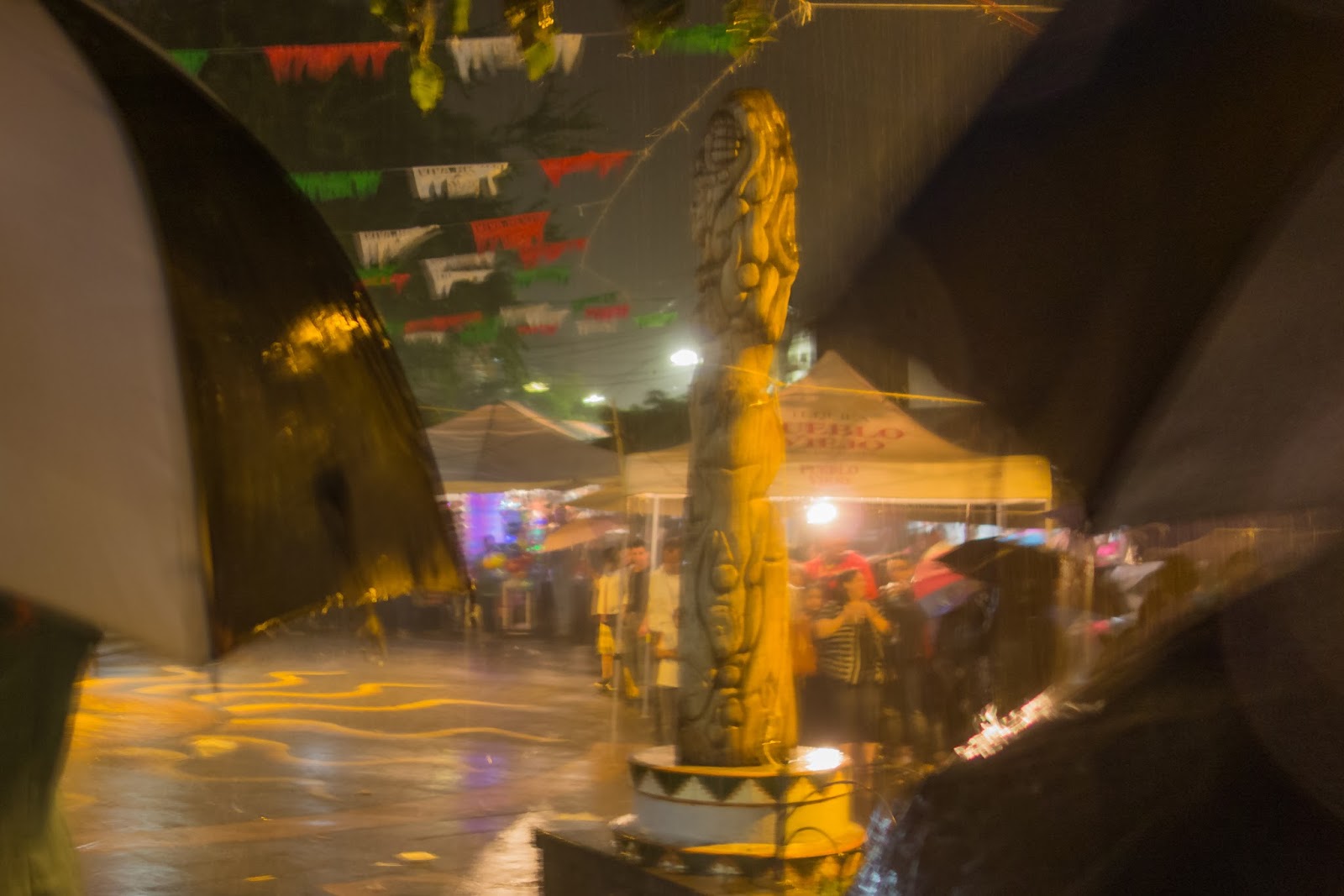
It's raining in the plaza. I'm waiting for El Grito.
In Mexico  El Grito means “The Cry” or “The Shout” and it refers to Miguel Hidalgo’s call to arms against the country’s Spanish overlords delivered over 200 years ago on the night of September 15th. Every year on that date, at precisely 11PM, in the plazas of ciudades y pueblos all over the country, El Grito is repeated for all the people to hear again. Only trouble: no one knows for sure exactly what Hidalgo said. 

One thing is for sure, though, at least nowadays, El Grito, spoken by some politician or luminary, always concludes with, “Viva Mexico!” loudly shouted three times. We two gringos—my wife and I—listened pretty much uncomprehendingly last night to El Grito until we recognized those words. They were enthusiastically repeated by the folks crowded in our block-away plaza. Over and over again. Followed by fireworks, of course—at closing in on midnight. Thanks to the way cranked-up amps, it was stirring to hear even from our bed.

I had planned to be at the plaza then in person; left a little after nine to get a good seat. Found one, and then a much better one when some abuelas booked up and left. I figured they had gotten tired of waiting, listening to the interminable patter of MCs. But it was a different kind of patter that had them walking quickly to stand under the nearest awning. And it wasn’t long before that promise was proven by a downpour. We’re talking serious solid rain, here, folks. I ducked under a tree and thought myself lucky to be out of the worst of it.

Long story short: rather than get wetter and wetter as the deluge continued for who knows how long, after about fifteen minutes I opted to make a quick run home, from overhang to doorway, trying to keep out of the rapidly flooding street. Striped off my clothes. Laughing wife. Hot shower. The downpour ended half an hour later.

The shindig at the plaza though continued until 4AM. The huddled masses escaping the rain under restaurant awnings and vendors' umbrellas returned to claim their seats. Back home, after El Grito, we closed our windows, doors, and turned up the white noise. Even so—not much sleep.

Almost too much cuteness.
By 8AM this morning, the policia cars were running up and down our street loudspeakering and blatting their siren. Accompanied, for show, by the town’s one tow truck they were exhorting all coche owners to remove their vehicle from the Dia de Independencia parade's designated route. About 10AM the parade began, and it consisted almost solely of all our village’s schoolchildren, in uniform. I guess the idea is that almost everyone else is either just sleeping, sleeping it off, still hungover, or still drinking.

At least the charros we saw lounging on their horses when we went to the plaza for lunch today were still imbibing, as were a couple of cronies on benches. One fellow was sprawled asleep behind last night’s stage. 

By tonight, though, things are hopping again in the plaza. It’s 9:30 now—early. Our neighbor says the noise won’t be as late or as loud as last night. It's at least the same volume, though, now. No telling how late it’ll last. About time for that white noise again.

Monday, September 14, 2015

XXXVI. Regata de Globos

Regatta of Hot Air Balloons

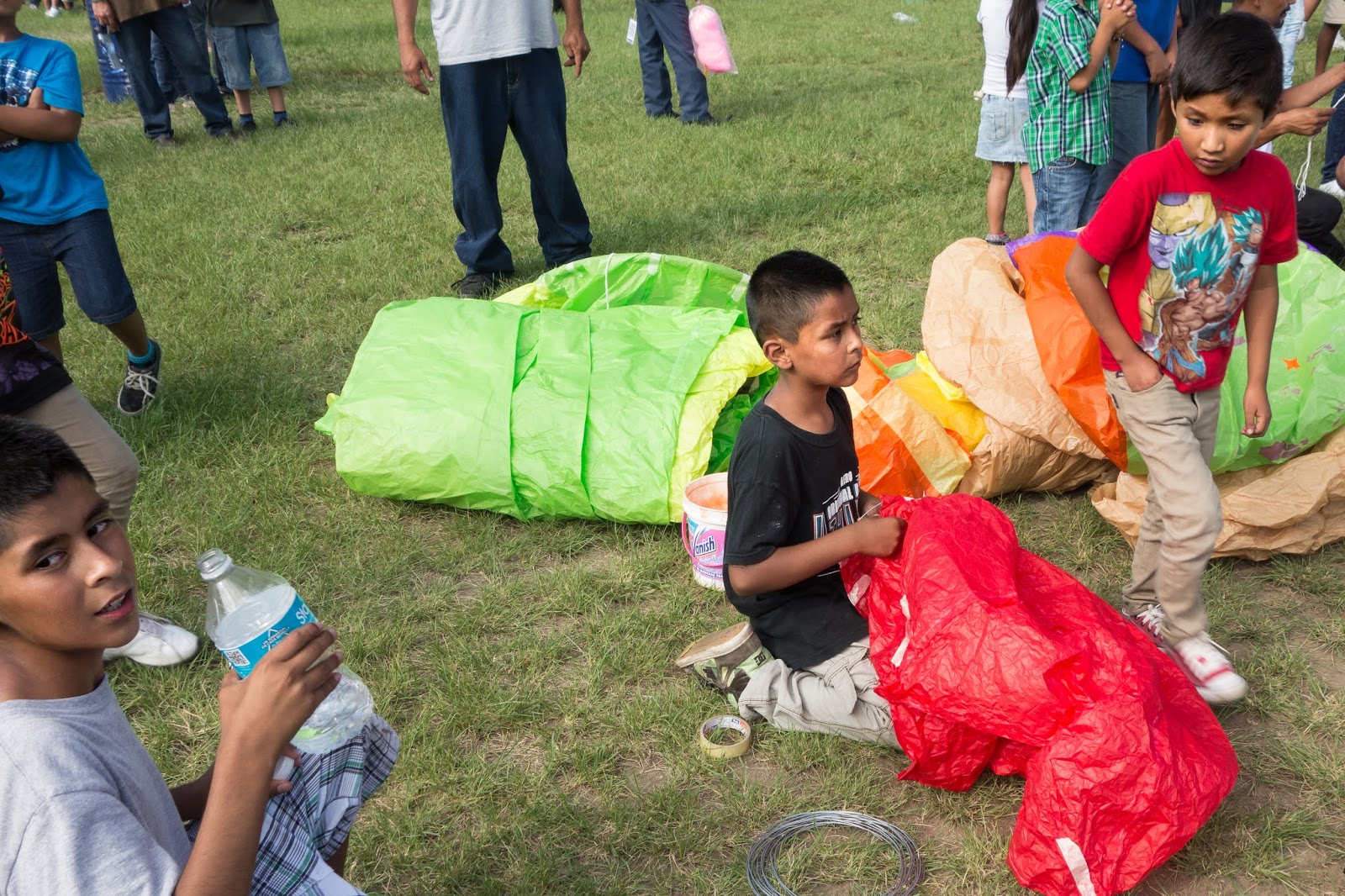
Globos are unmanned hot air balloons about the size of a small garage, and Regata de Globos has become an Ajijic tradition to kick off Fiestas Patrias--a week of celebrations that commemorate Mexico's call to independence from Spain. About every two minutes for over three hours there's a launch from one of the many teams gathered in the fútbol field. Sometimes the balloon comes down in flames over one of the adjacent gated, ex-pat communities, but mostly it continues to rise and slowly recede from view into the high blue distance. The following is a pictorial chronicle of the event.

As the guy on his belly, far right, holds the lit propane torch to heat the air inside the balloon, some of his assistants patch any leaks that have appeared. Others hold the balloon's side away from the flame, and the fellow with the combustible pad in hand stands ready to hand it over for placement just inside the balloon's neck, to keep the air heated and the balloon aloft.

The combustible pad is lit and attached in place and the 15 foot tall balloon begins to rise. The banner acts as ballast to keep the globo more or less upright. Otherwise the small flame may touch the side and the balloon quickly disintegrate in a ball of fire.
The balloon is on its way!

Uh-oh. A nearby group has interrupted their preparations for launch to watch something in the sky that appears to give alarm. What could it be?

It's not our Team Orange's balloon, but another that has caught fire!

This balloon is now just a burnin', churnin' hunk o' steamin' plastic, plummeting to earth. Will it land in some rich gringo's garden, or..?

Not. Fortunately, the balloon had not risen too high. It fell back to the fútbol field where one of the ambient gangs of young boys rushed to play with the flames and investigate the remnants of the fiery crash.

Meanwhile, other children assist with a launch of another grownup team's balloon, while still others...

Work on their own creation, perhaps dreaming of days to come when they will assemble...

Something grand of their own. It could be a weird character from a video game, or...

A character from another video game. Or, moving on to the real, as opposed to virtual, world, perhaps...
They will put together something that resembles their favorite luche libre wrestler. They might have higher aspirations, though, and taking their cue from mathematics they might create...

A polyhedron...But that might not be enough to satisfy the questing young mind. With the help of others now, the ambitious student might construct --

A dodecahedron! By this time, though, the young one may have lost faith in the material world and be reaching for something in the spiritual dimension, and so she sees--

A cross rising triumphant out of a cloudy and troubled sky...Or maybe not. Assuming the mantle of omnipotence himself, the now older young person could possibly even labor to construct...

A vessel that could hold his proxy self--a wee mousey passenger would fit (with parachute of course)...

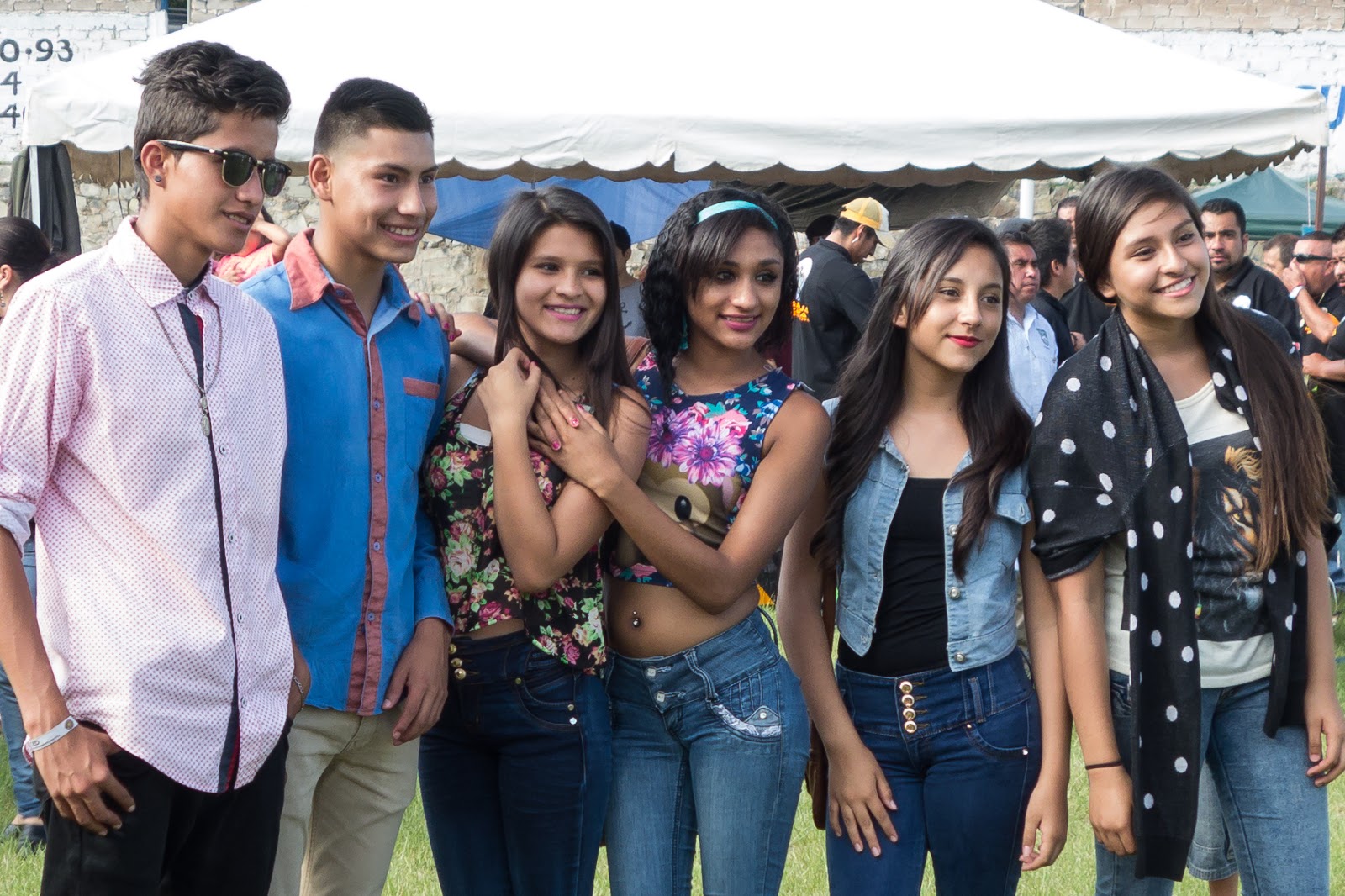
Moving on: Young adults at this shindig, meanwhile, take selfies (memorializing their place in front of the beautiful globo while ignoring the crew frantically trying to launch it), or...

Take more selfies (ignoring an ominous globo on the rear horizon about to grab that new $600 iPhone), or...

Pose for someone else, or...

Just have fun!!!

Plunk your magic twanger, Froggy!

Saturday, September 12, 2015

XXXV. Nuestro Viaje a Patzcuaro

Our Trip to Patzcuaro


Our recent trip to Patzcuaro, a large Colonial-era town in the adjoining state of Michoacan, was just over 300 km—about 200 miles one way. Most of the drive was on a restricted access toll road, like an Interstate highway in the States. About a tenth of the journey, though, was on pot-holed, undivided asphalt roads that traveled through small pueblos and across unfenced rangeland. 

Miles of these walls added a feeling of permanence to
human activities on the land. This is a rare example of
unrepaired damage, perhaps related to harvesting the nopal.
It is high country. Our home in Ajijic is the same altitude as mile-high Denver, and we traveled up to about 7500 feet. It is not mountainous, however. There are broad, broad valleys—and vistas—and plateaus sloping up the shoulders of ancient, widely spaced and much-eroded volcanic peaks. The countryside was green from the rainy season, but in no way tropical. Think of pine vying with cactus.

This is the geographical center of Mexico in a large area known as the Colonial Highlands. Inhabited for millennia by indigenous cultures, this area was seized by the Spanish conquistadores nearly five hundred years ago and its people subjected by the state as well as the Roman Catholic Church. In both poor pueblos and well-off cities you see many centuries-old churches that are still in use, and in most cases elaborately decorated.

At end of day, a flower vendor loads his wares at Plaza Chica's
market for the trip back home.
Aside from the churches, the other image that abides throughout all that country are the rock walls you see everywhere, up and down, and stretched across the landscape, delineating pastures and plantings. About four feet high, they are constructed of one or more layers of hefty, lichen-encrusted volcanic boulders. These walls give, to me at least, a sense of permanence to the lives that are lived among them.

My many rehearsals of this trip on Google Maps and Street View, which pictured even the most out-of-the-way roads, served me well. I never got lost on the way to Patzcuaro, or back. Nothing prepared me, though, for what a large bustling place it is, nor the way its boulevard entry of pines reminded me of a Montana mountain town.

The lobby of our hotel--notice the statue of the Virgin above
the fireplace. Our room was just out of the picture, top right.
The mental map I had imprinted allowed me to make the right turns as we headed for our hotel, but we were taken aback by the unending stream of small white vans called collectivos that crowded the Centro area, taking passengers to and from the many small villages that surround this market town. 

The center of all this activity was at one corner of the smaller of the two main plazas in the town. Our Catholic-themed hotel (large picture of the Virgen as you entered, Christ on a cross facing the front desk) was at the opposite corner in a stucco two story, portaled, three hundred year-old building. Each room was named for a religious figure, in our case, Archangel Jehudiel. It was an attractive room, with a small balcony out over the street, but the bathroom was ridiculously small and had a large step up that was particularly challenging at night. 

Plaza Grande at dusk
Patzcuaro’s main market was the reason for all the bustle around this small, or chica, plaza. Every day of our stay, countless vendors set up their stalls selling all manner of goods on the streets surrounding the claustrophobic warren of shops in this mercado. At the end of another street leading into Plaza Chica was a second large cluster of plastic tarp-covered stands and more permanent—but only slightly—wooden structures with even more vendors. 

Between about 10AM and 10PM the place was abuzz. And people in Patzcuaro don’t so much stroll, as they do in our little village of Ajijic, but stride. We were unused to this pace that we hadn’t seen since our last trip half a year ago (another lifetime!) into downtown Seattle. There was another thing that—at times—reminded us of our old home in the States—the cool and often cloudy weather.

Very peaceful just to sit on a pew as a few people moved
quietly about.
Regardless, it wasn’t long before we had found an amiable place on Plaza Grande, a block away from our hotel, that served excellent coffee and decent breakfasts, and we made that each day’s first destination. This plaza truly was large, and all around it, in addition to restaurants, cafes and hotels, as well as on the streets leading into the plaza, were numerous small and fairly upscale stores. Especially zapaterias! We’ve never seen so many shoe stores in such a relatively small area in our lives.

After breakfasts, we would take in the sights, either in Patzcuaro, or on several days, in the villages and countryside nearby. Our favorite two places in town were the Basilica of Nuestra Señora de la Salud and the Casa de los Once Patios. Both were beautiful, the former with man-made elegance and the latter because of it’s simple design and variety of eye-candy plantings. As much as the beauty, though, we appreciated the peace and quiet of each.

The House of Eleven Patios is down to five now. Regardless,
it is a great place to relax, as well as shop directly from some
talented artisans.
One striking thing about Patzcuaro is its strict conformity in the style of the buildings and the way they are painted. It seems that no construction, except for churches, is more than two stories high, nor painted any colors except whitewash with brick-red bottom trim. Even the style and size of lettering for store names is unvarying. Except for churches, again, everything is stucco with tile roofs and extended beams. What a contrast this is to Ajijic where every stucco housefront seems to be a different color scheme, with gratuitous textures and designs, borders, sculptures, murals and flourishes everywhere. We prefer the latter.

 One thing that did enliven the atmosphere were the national emblems and seals, and red, white and green banners and bunting strung up around the plazas, especially, as well as all over our hotel. At night, at Plaza Grande, the decorations were illuminated. This was the ramp up to Fiestas Patrias—the week beginning in just a few days when Mexico’s independence is celebrated. Viva Mexico! Libertad! Oh, days of glory to soon come!

An ice cream vendor counts his take at Santa Clara de Cobre's
plaza. Notice the huge copper pot hanging in the gazebo.
Our two trips out of town were to the villages of Santa Clara de Cobre and Tzintzuntzan. Each specialized in a different craft. Santa Clara featured all manner of handmade copper work, at unbeatable prices. We bought a small, classically simple urn. The strange name of the other village comes from a Tarascan word describing the flight of a hummingbird. This place makes more types of straw items than you can imagine. A large grass footrest shaped like a pig? No problem. We settled for a straw hat and a small wastebasket.

One of the other things we loved about TeeZee was the nearby archeological site with its partly rebuilt, semi-circular pyramids on a vast platform overlooking the village. The perfect temperature, dark blue sky with flocks of fluffy clouds, vistas over the northern part of Lake Patzcuaro to distant mountains, and the silence all made this a relaxing and inspiring place to spend my birthday.  

Tzintzuntzan pyramids with Lake Patzcuaro in background.
We also found peace, as well as some of our favorite music, in the mostly quiet park whose cantera stone portal was hidden behind the village marketplace. Four hundred year-old olive trees are planted inside the walls. We followed some well-dressed familias, with young’uns, down a path leading to several more ridiculously old and picturesque religious buildings. We’d stumbled across some christenings, it seems, as well as the cause of the mariachi music—a quinceanera, marking a young lady’s coming of age, at fifteen.

Those last memories of Tzintzuntzan are a good place to end this account. We’re back in Ajijic now. This trip marked the term break between Spanish classes. We’ve just begun our new seven-week session, which means our next vay-cay will be during the two weeks around Dias de los Muertos when our sweet daughters will be visiting. I’m not sure how things will fall after that, but sometime around the beginning of the year we will be off to Zihuatanejo, on la playa, on the ocean. And then? Who knows, but loving this life.

A mariachi belts out "Mexico, Querido y Lindo" at quinceañera
in Tzintzuntzan.